About Mitsubishi Electric Factory AutomationOur Commitment to Sustainability

Our sustainability initiatives follow two themes: "the contribution our products make towards our customers' sustainability programs" and "the contribution of our efforts to improve our own production processes".
Basic Policy
As a leading manufacturer of factory automation products ranging from programmable controllers to laser processing machines, Mitsubishi Electric is able to support a wide range of manufacturing industries throughout the world, especially in the topical area around "sustainability"
We strive to help customers achieve sustainable manufacturing by providing advanced energy-saving equipment and solutions, and help address decarbonization issues and labor shortages by utilizing automation technology.
| We recognize the following major social issues as both risks and opportunities to change | We are focused on the following sustainablity goals |
|---|---|
|
■ The sustainable use and development of resources |
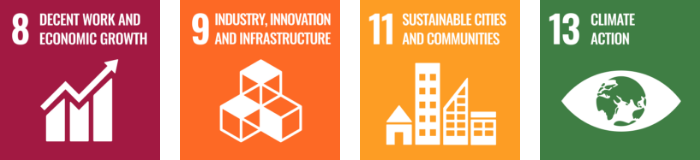 |
| We recognize the following major social issues as both risks and opportunities to change |
|---|
|
■ The sustainable use and development of resources |
| We are focused on the following sustainablity goals |
|
|
Our approach towards sustainability
1. Contributing to "realizing a decarbonized society" by reducing energy consumption in factories
As society moves towards decarbonization, factories are becoming a focus of attention due to the large amounts of energy they consume. By leveraging equipment, devices and solutions with high energy-saving capabilities, factories can reduce energy consumption in a very effective way.

Examples of products that can contribute towards realizing a decarbonized society
2. Contributing to overcome labor shortages by streamlining manufacturing processes
Innovation in automation is essential to make manufacturing sustainable, especially around issues like the declining birthrate and ageing population experienced in many of the leading markets. By using automation technology to improve the efficiency in manufacturing , we can overcome the expected labor shortages in the next generations.
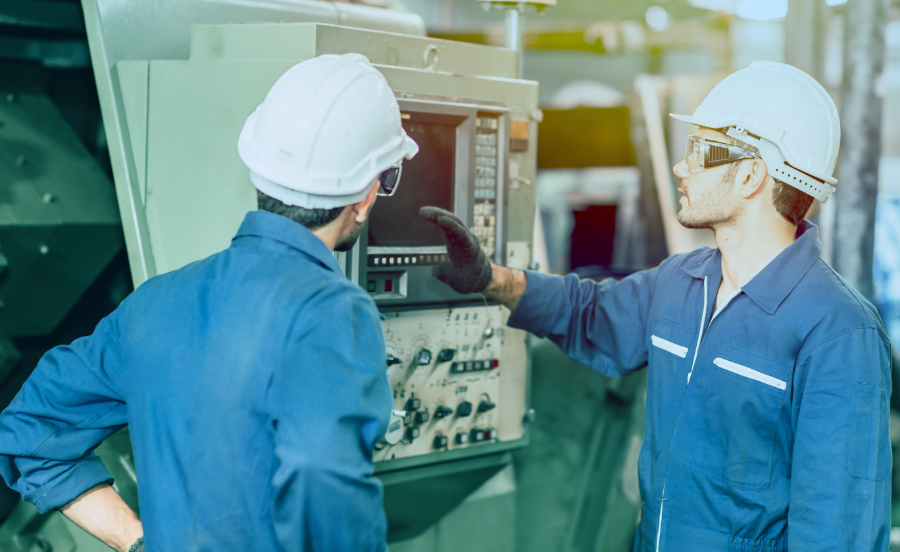
Examples of products that can contribute towards addressing labor shortages
What solutions can Mitsubishi Electric's FA products provide?
Realizing a decarbonized society
Providing highly efficient equipment and visualization tools contributes to the realization of a decarbonized society
Efforts to achieve a decarbonized society are expanding from an individual company level, to the entire supply chain. Moreover, in some cases, companies have been requested to reduce their CO2 emissions by their own customers, regardless of the company's own volition.
The manufacturing industry can contribute to the realization of a decarbonized society, by effectively reducing CO2 emissions per unit of production through improved productivity, constantly checking energy consumption and CO2 emissions through visualized data, and implementing improvement measures.
Mitsubishi Electric supports these activities by providing high-efficiency equipment and visualization tools that make full use of digital technology to enable improvement measures to realize a decarbonized society.
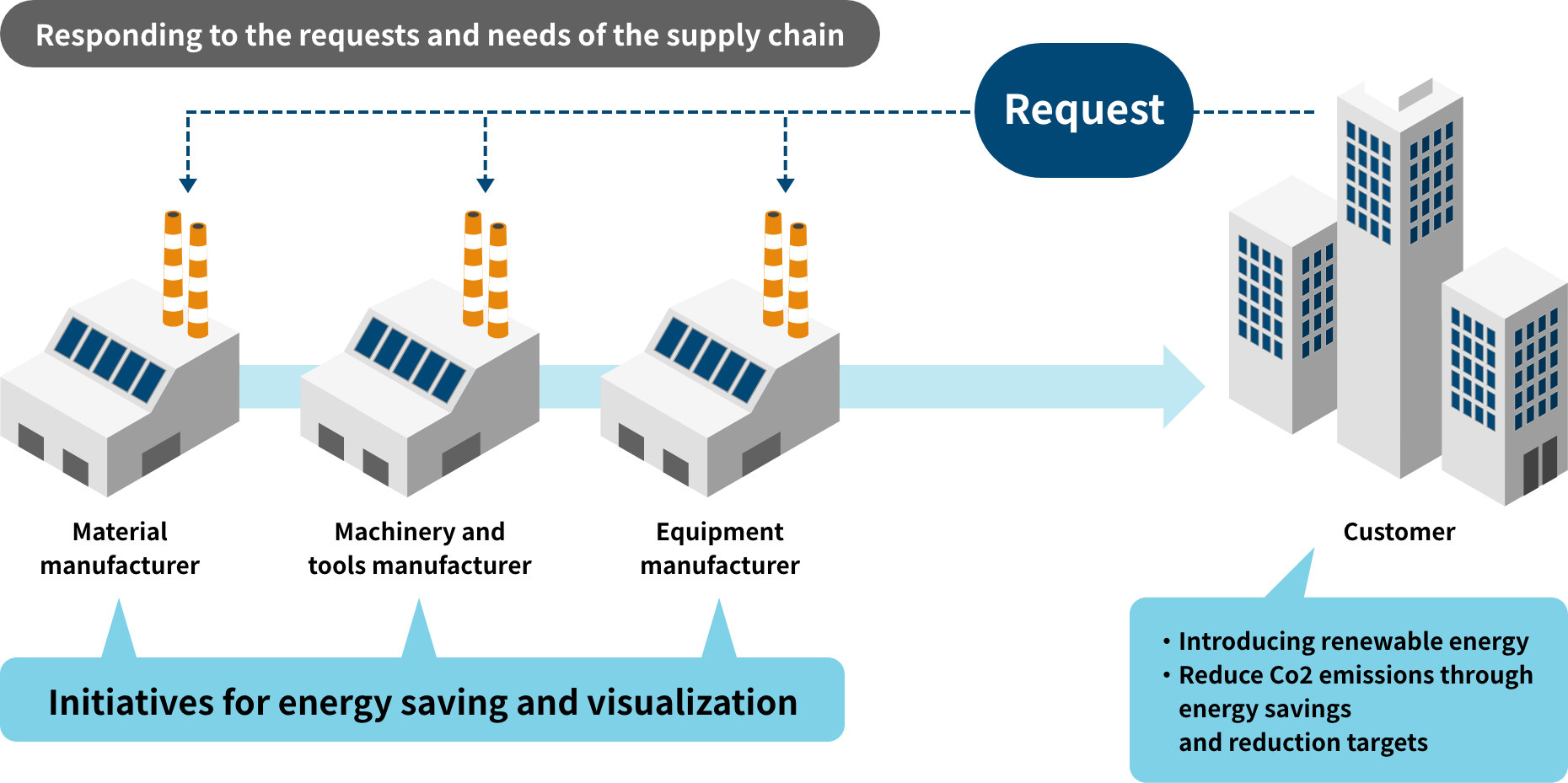
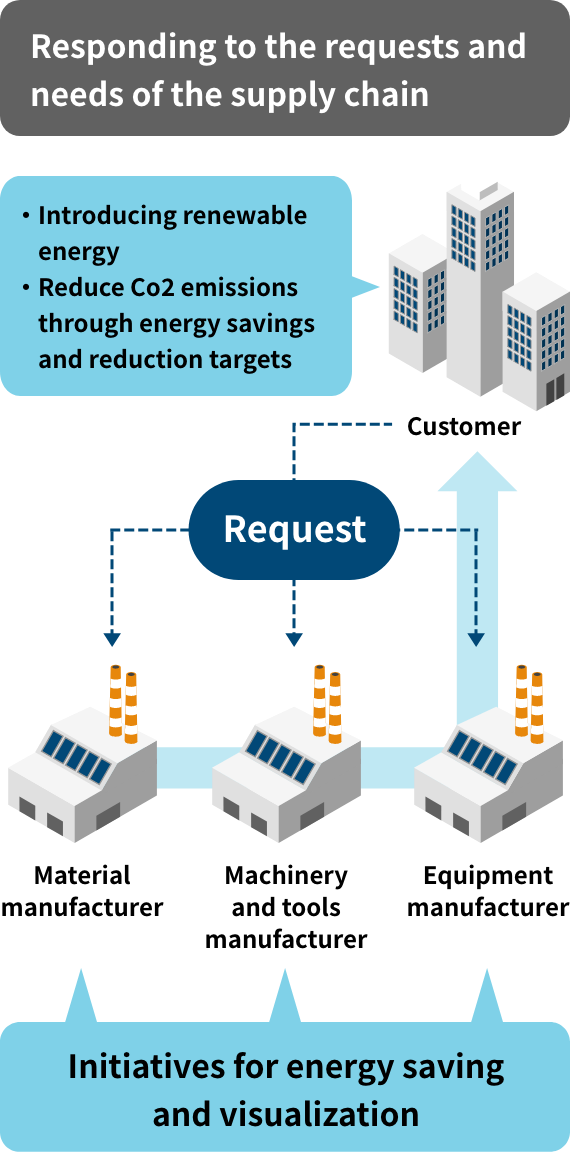
Examples of products that can contribute to the realization of a decarbonized society
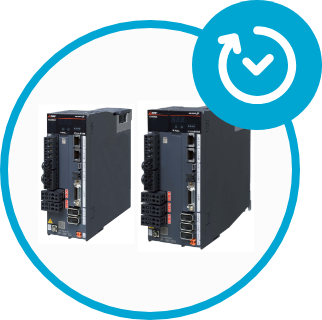
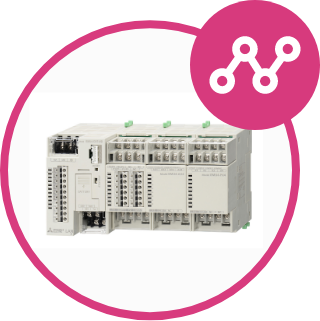
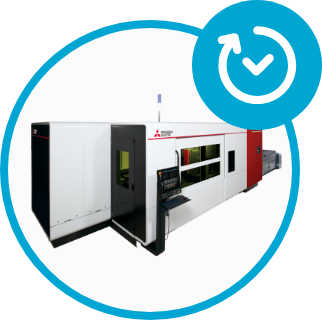
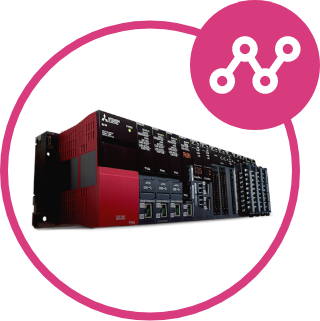
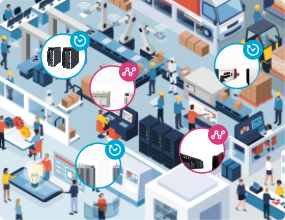
 High efficiency
 Visualization
Contribution through improved efficiency and productivity
We contribute to reducing CO2 emissions by utilizing regenerative energy and energy-saving equipment, as well as reducing energy consumption by shortening equipment operation time through improved productivity.
Contribution through visual insights
We support customers promote continuous improvement activities to reduce CO2 emissions through the visualization of energy consumption, and the provision of energy-saving analysis and diagnosis services for existing facilities and equipment.
Click here for solutions related to the realization of a decarbonized society
Measures to address labor shortages
Improving manufacturing efficiency by increasing productivity through automation.
Responding to the recent decline in the working population, manufacturing is being carried out using a smaller number of people, in other words, it is essential to use "automation" to achieve sustainable manufacturing. Automation is also effective in ensuring consistent quality and reducing the reliance on the proficiency of individual workers.
Mitsubishi Electric promotes the use of automation to stabilize quality at unmanned work sites or production sites utilizing smaller workforces.
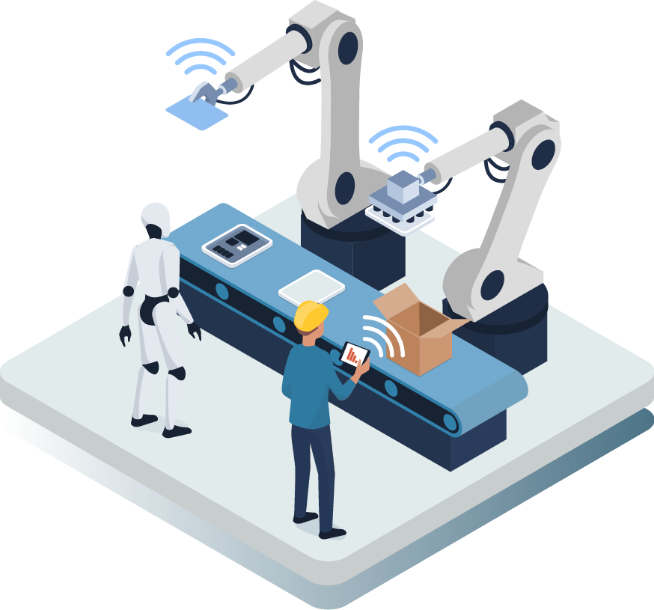
Examples of products that can contribute to addressing labor shortages
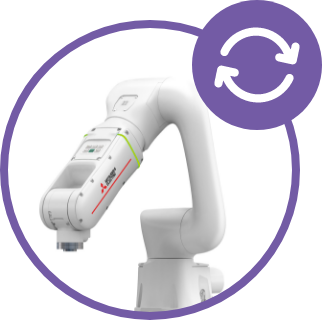
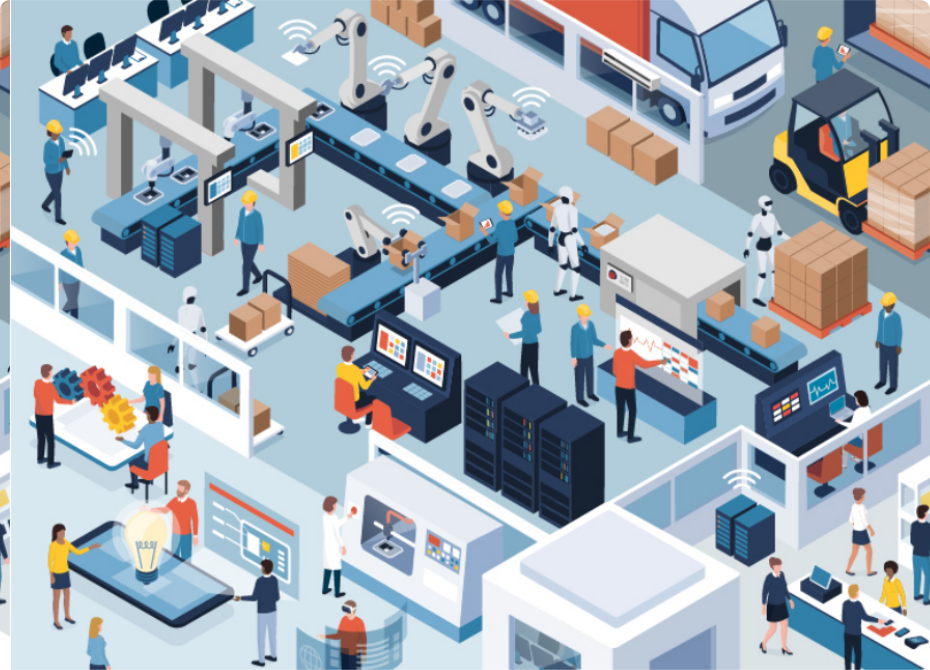
 Automated processes
Contribution through automation technology
The use of automation technologies such as robots and sensors helps contribute to solving problems around the increasing labor shortages.
Click here for solutions that address issues around labor shortages
Serendie Automation: Supporting Higher Productivity and Lower Environmental Impact
Serendie Automation is Mitsubishi Electric’s solution brand, combining factory automation and control technologies with AI and digital technologies to support factory-floor improvements and address business challenges. By using data from design, manufacturing, and maintenance alongside shop-floor expertise, it helps reduce labor requirements, keep equipment running reliably, and optimize energy use. Through co-creation with customers and partners and ongoing support, it contributes to sustainable manufacturing that enhances productivity while reducing environmental impact.

Our initiatives as a manufacturer
Environmental Plan 2030 (FY2027-FY2031)
Reduction of environmental impact through business activities (Environmental Plan 2030)
| Focus area | Key performance indicators (KPIs) | Targets |
|---|---|---|
| Carbon Neutrality | Greenhouse gas emissions Scope 1*1, Scope 2*2 |
Achieve carbon neutrality at factories and offices |
| Greenhouse gas emissions Scope 3*3 |
Reduce emissions by 30% or more compared with the fiscal year ended March 31, 2019 | |
| Circular Economy | Effective utilization of plastic waste*4 | 100%*5 |
| Water intake at high-risk bases (basins) |
Reduce by 6% or more from the fiscal year ended March 31, 2025 | |
| Nature-Positive | ||
| Biodiversity protection (promotion) activities at business sites | Natually Certified Sustainably Managed Natural Sites*6 (OECM*7 registration) for all green spaces managed by Mitsubishi Electric in Japan | |
| Protection of natural environments around business sites through collaboration with local communities and environmental education | Japan: Continue Satoyama Woodland Preservation Project and Mitsubishi Electric Outdoor Classrooms*8 at all business sites | |
| Overseas: Tree-planting and other environmental conservation activities |
Source: Mitsubishi Electric Group, Environmental Plan 2030 (excerpted to include only items related to the FA Systems business)
*1 Direct emissions from the use of own fuel
*2 Indirect emissions from the use of electricity and heat purchased from outside the Company
*3 Indirect emissions from the entire value chain, excluding Scope 1 and 2
*4 Only manufacturing-related waste generated at factories is included. (General waste is excluded.) The percentage of generated *waste that is reused through material recycling, chemical recycling, and thermal recovery.
*5 It applies only when local regulations and conditions regarding plastic waste, as well as local recycling capacity, are met.
*6 Nationally Certified Sustainably Managed Natural Sites (the Ministry of the Environment)
*7 OECM: Other Effective area-based Conservation Measures
*8 Satoyama Woodland Preservation Project, Mitsubishi Electric Outdoor Classrooms
Measures by Mitsubishi Electric Factory Automation Systems
Enabling energy savings in buildings and facilities
In addition to reducing CO2 emissions by upgrading air conditioners, switching to LED lighting, electrifying steam heaters, and using solar panels, we are also implementing the following measures.
Saving energy consumption in production utilities:
Integrated control has been applied to production equipment such as air conditioning, exhaust air systems, air, water etc., as well as the optimized control of both clean and temperature-controlled rooms, etc.
Energy management:
In addition to considering the practical usage of existing energy data from production sites, it is planned to expand the infrastructure for measuring energy data.
Production equipment/line:
Air-less, steam-less and waste heat management is promoted through the electrification of systems.
Expanding the use of renewable energy and "carbon offset" energy
With regard to the introduction of renewable energy, we have been expanding the use of CO2-free electricity at our manufacturing sites since April 2022. In addition, some of our plants have switched from using city gas to carbon-neutral LNG*.
With regard to the introduction of renewable energy, we have been expanding the use of CO2-free electricity at our manufacturing sites since April 2022. In addition, some of our plants have switched from using city gas to carbon-neutral LNG*.
Effective utilization of plastic waste
By promoting research and sharing information about relevant technologies among recycling processors, we aim to achieve 100% utilization of used plastics by 2035.
Effective use of water
We are implementing the use of gray water at some of our plants, for example, treated wastewater is used for flushing toilets.
Actively working to reduce our own environmental impact
By leveraging its FA products and solutions, Mitsubishi Electric Factory Automation Systems Group is able to reduce the environmental impact of its own production processes and factories.
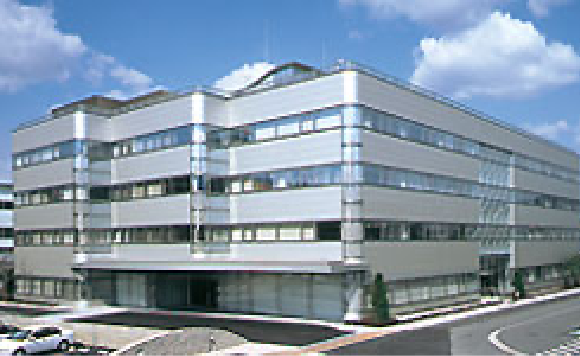
Actions to reduce the environmental impact at Nagoya Works, Aichi Prefecture, Japan
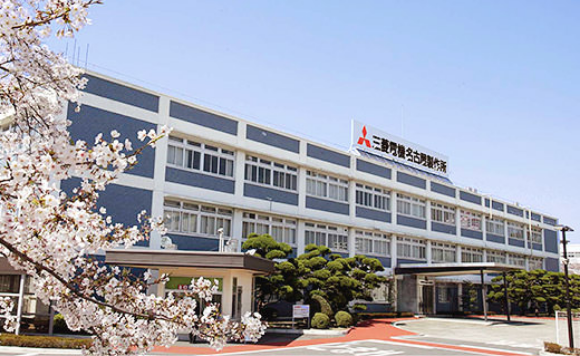
- High efficiency transformers reduce power consumption and CO2 emissions by 55%
- Reducing operating and maintenance costs to 1/6 by improving durability
- Energy saving control system for air conditioning and lighting
- Improving equipment utilization rates by visualizing production results
- Clear work procedures improve productivity and quality
- Improving quality and eliminating human errors
- Realizing small-lot, multi-cycle production using robot assembly cells
- Improving productivity on production lines
Actions to reduce the environmental impact at Fukuyama Works, Hiroshima Prefecture, Japan
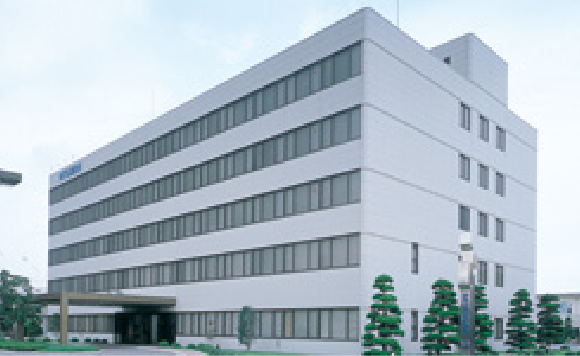
Actions to reduce the environmental impact at Nakatsugawa Works, Gifu Prefecture, Japan