

Insights

[MG Series EDM]Digging deep into customer feedback showed the way to go
Published in May 2026

Part 1: What is more important: speed or stability?
“Will these meetings never end?” It was February 2024, and discussions about the development of a new model of wire-cut EDM (electrical discharge machining) system seemed to be never-ending. Far from reaching a conclusion, the discussion was getting more complicated, even becoming heated at times. Everyone involved was growing tired and frustrated, but there was no sign of a conclusion in sight. It was clear that the project was going nowhere.
This frustration was understandable. The original target release date for the new model was just a few weeks away. By now, the development team should have been making final preparations for release – yet they were still discussing the basic question of what kind of product to make.
Conflicting themes
The story goes back two years to March 2022, when the Industrial Mechatronics Systems Works launched a project to update the MV series – Mitsubishi Electric’s standard wire-cut EDM system. This was the first major upgrade to the series in 13 years. Initially, the team proposed focusing on energy-efficiency, which aligned with the industry’s emphasis on environmental concerns and Sustainable Development Goals (SDGs). However, the project team decided that energy-efficiency alone was not a strong enough theme for a once-in-a-decade upgrade. To be competitive, the EDM system needed improvements to its fundamental machining capabilities.
In spring 2023, a new functional target was proposed: to improve the surface finish after machining. Existing machines, using four eroding cuts on a 30-mm-thick steel plate, typically achieved a surface roughness of Ra 0.4 µm, so the target was to improve this to Ra 0.3 µm. Because some users required an even smoother finish of Ra 0.2 µm, the team also began work toward that goal.
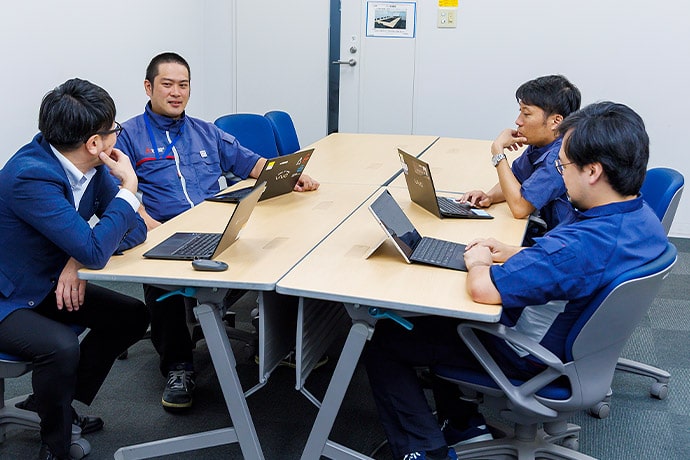
Although development was underway, the target kept shifting. Some argued that Ra 0.35 µm would suffice, while others prioritized improving machining speed. Since the MV series debuted, Mitsubishi Electric had rolled out minor speed upgrades following user feedback, and operators had consistently requested greater speed. Wasn’t that the obvious focus for the first major update in 13 years?
With opinions divided between the conflicting themes of energy-efficiency, surface finish and speed, the direction was still undecided going into 2024. The developers were growing frustrated, causing meetings to become heated.
Users want a machine they can leave running unattended
In fact, the project team had been aware for some time of a fundamental question: “Is speed really what users want?”
“Electrical discharge machining takes time, so users often press the start switch at the end of the working day and leave it running overnight. Ideally, it should be finished the next morning. Thinking about this kind of unattended operation, perhaps what users really require is stability, so the machine can keep running for long periods of time without errors, rather than speed,” explains Koichiro Chikahisa.
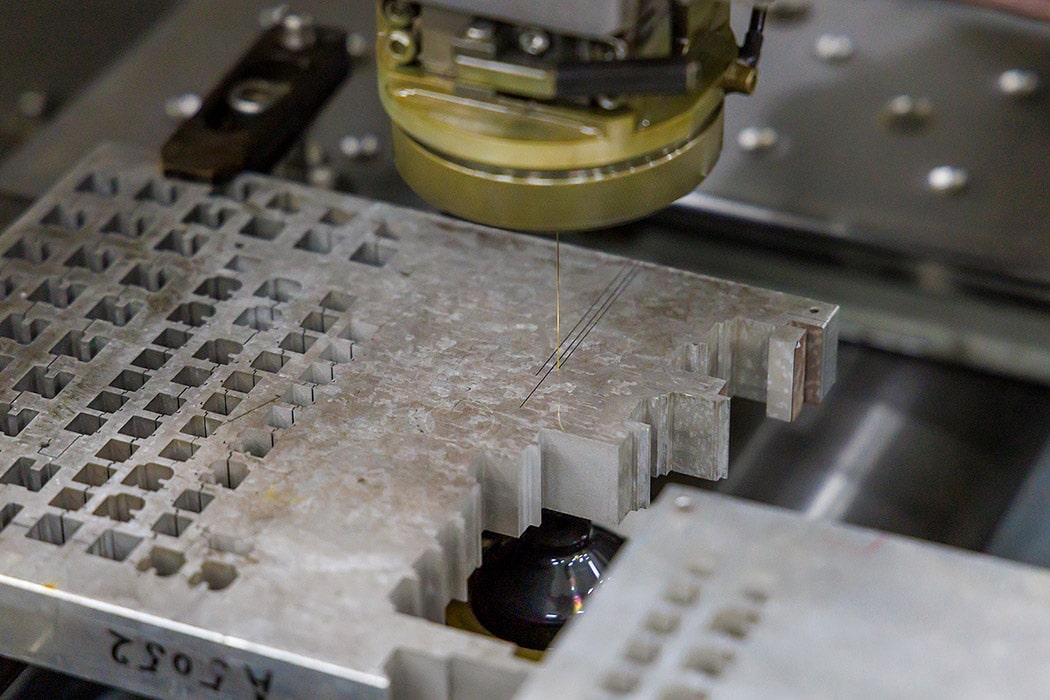
Wire-cut EDM systems cut materials using electrical discharge from a wire. Because this takes time, users often leave the machine running overnight
Machining errors can cause EDM systems to stop, often preventing operators from leaving machines unattended. When machines are left running overnight, engineers routinely return every few hours to check on them.
Perhaps what users really needed was an EDM system that lets staff leave the workshop overnight with confidence machining will be completed successfully by morning.
“In fact, some users had pointed out that although Mitsubishi Electric’s EDM systems offered fast machining, sometimes they were not stable without continuous fine adjustment,” reveals Katsuhiko Hayashi.
While the machining speed of the MV series has been improved, the trade-off between speed and stability has always been an issue.
“Machining can be stabilized by fine adjustment, but this requires highly skilled engineers with the expertise to perform the adjustment,” Hayashi explains. But the reality of the manufacturing industry today, where worker shortages make it difficult to pass on technical skills, means this can no longer be taken for granted.
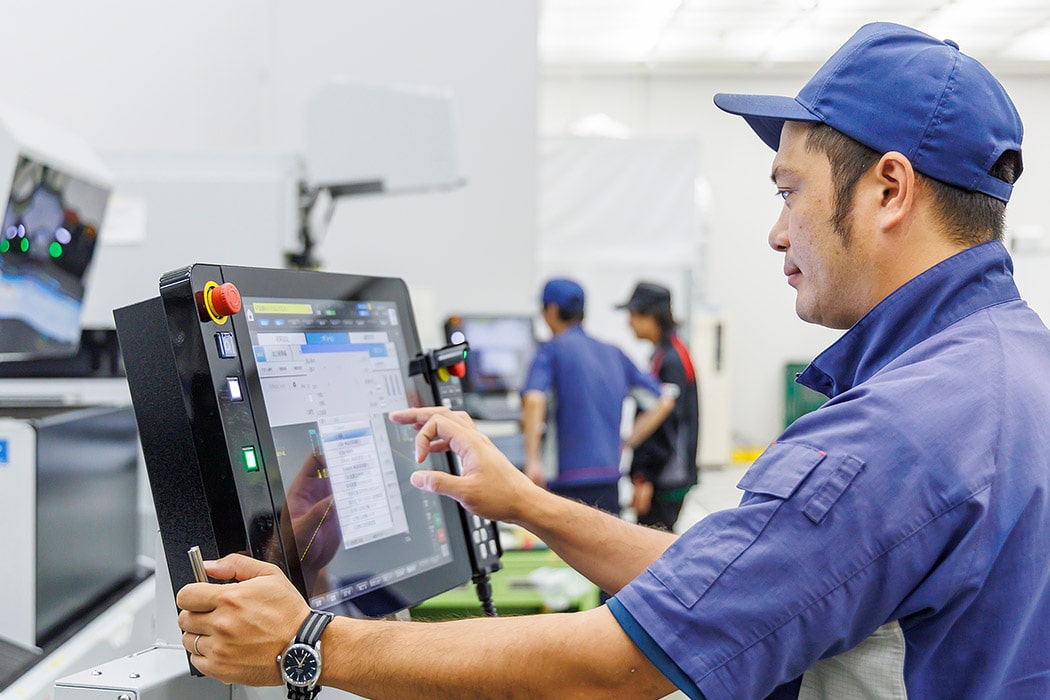
EDM systems usually require fine adjustment by highly skilled engineers
There had been concerns on the sales side as well. “When talking with customers, they often mention machining speed, but if you listen carefully, what they really need is stability,” says Akito Hamada.
What matters most to users is the total time from start to finish of machining. Since machining speed is nearing its limits, the biggest improvements come from eliminating unexpected stoppages that cause downtime.
In this industry, machining speed is usually the key to competitiveness, and it is rare to use machining stability as a selling point. This would certainly set Mitsubishi Electric’s product apart from its competitors. Two years into the project, the team had finally found the direction they should take.
A change of direction at this late stage?
The project team presented the idea of “stability over speed” to a meeting of company executives in mid-2024, but they immediately hit a stumbling block. The project had originally been authorized on the understanding that the new model would aim to improve performance, including speed. To start heading in a new direction, the team would need to obtain approval for the change in policy. Such a change may have been fine in the early stages of the project, but company executives were naturally suspicious about overturning the basic policy at this late stage, two years into development.
A measure of performance like speed, which can be clearly expressed as a number, is easy to understand and attracts the interest of users, but Chikahisa’s proposal would mean speed taking a back seat in favor of stability. Of course, the executives were bound to raise objections.
However, the project team did not back down. “How many users will be interested in performance improvements? We believe it is more important to pursue stability,” Chikahisa insisted. His persuasive argument eventually convinced the executives, and the change in direction was approved.
The project team breathed a sigh of relief after that meeting. “At last, it was clear what we needed to do,” commented Hayashi. The discussion had been long and difficult, but now they could finally get on with development.
By this point, the new model should already have been released, But the development project was significantly behind schedule, even before it began.